
Roofing
Sizing a Dumpster for a Roof Tear-Off
High-altitude sun ages a roof faster than most people expect, and the snow load decides what goes back on.
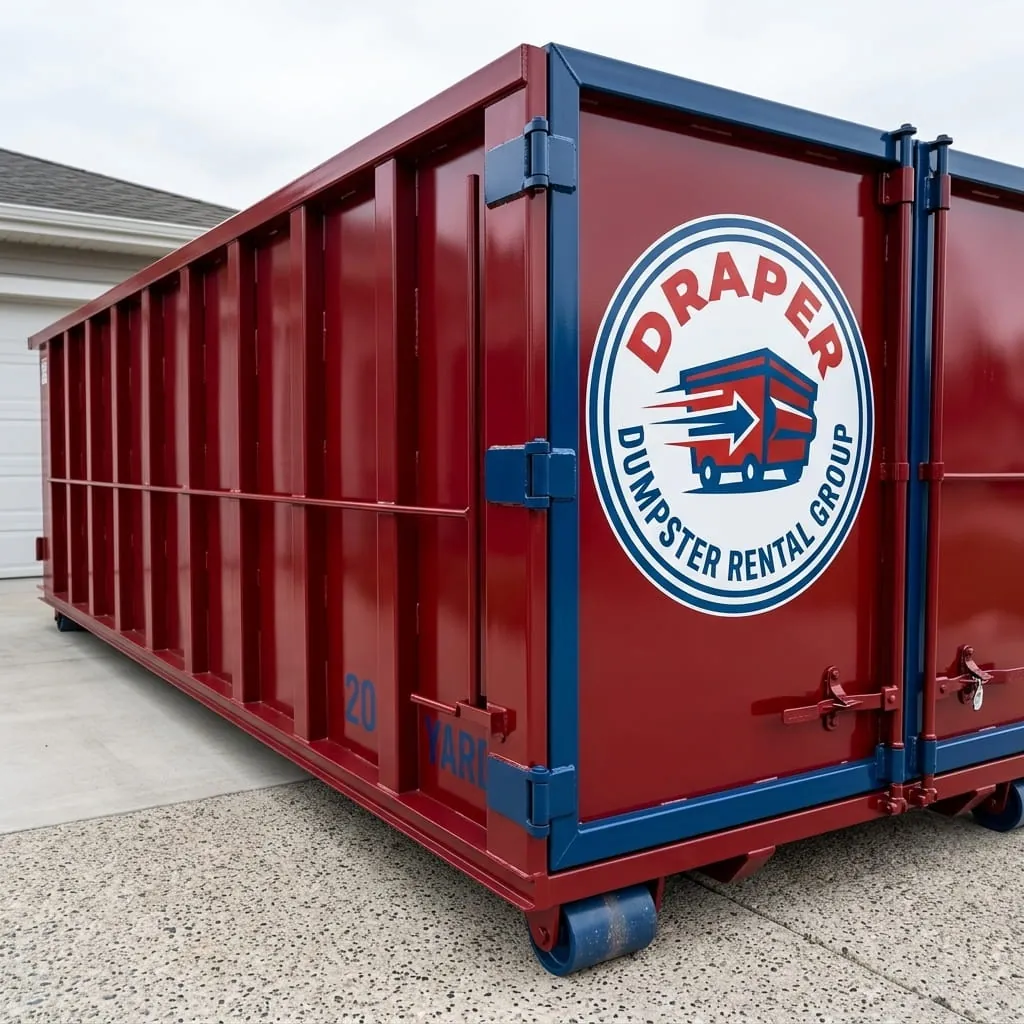
The one number that matters: squares
Roofers measure in squares. One square is 100 square feet of roof surface. A typical house across Draper and the south valley runs somewhere between 22 and 35 squares — the older Midvale and Murray houses at the lower end, the newer bench and Utah County builds considerably higher.
If you do not know your square count, your roofer does, and it is the first thing to ask.
What a square of roofing weighs
| Material | Approx. weight per square | Notes |
|---|---|---|
| Three-tab composition | ~200–250 lb | Older, lighter product |
| Architectural composition | ~250–400 lb | The current standard here |
| Wood shake | ~250–400 lb | Found under later layers on older bench homes |
| Concrete or clay tile | ~600–1,100 lb | Common on newer Utah builds — enormous weight |
| Metal panel | ~50–150 lb | Light but bulky; separate as scrap |
| Built-up / modified bitumen | ~300–600 lb | Flat roofs, porches, commercial |
| Decking (per sheet) | ~40–60 pounds | The variable nobody plans for |
| Anything snow-soaked | Substantially more | An open container in winter gains real weight |
⚠️ Tile is the local trap. A great many newer homes across this valley and over into Utah County have concrete tile roofs, and a tile tear-off can weigh three times what a composition one does. If your roof is tile, say so at booking — the sizing below does not apply.
Composition sizing table
| Roof size | Single layer | Two layers |
|---|---|---|
| Up to 15 squares | 15 yard | 20 yard |
| 15–25 squares | 20 yard | 30 yard |
| 25–35 squares | 20 yard (watch weight) | 30 yard + swap |
| 35–50 squares | 30 yard | 30 yard + swap |
| Over 50 squares | 30 yard + swap | Multiple containers |
Add a size if the decking is coming off too, step down one in deep winter when snow banks narrow the driveway, and ignore this table entirely for tile.
The second layer problem
The most common sizing mistake on roofing work anywhere.
A great many houses across this valley have had a second layer of composition laid directly over the original rather than a full tear-off. It was normal, permitted practice for decades. It also roughly doubles the tear-off weight.
How to check before you book:
- Look at the rake edge from the ground. A double layer usually shows as a noticeably thicker band at the roof edge.
- Look at the flashing and drip edge. Two layers often sit proud of them.
- On older bench homes, ask about shake. Wood shake under later composition is not unusual, and it changes both the weight and the disposal.
- Ask your roofer to confirm at inspection. They will know within a minute of getting up there.
If it turns up on the day, call us. A swap mid-job is far cheaper than an overloaded container that cannot legally be hauled, and the crew keeps working while the truck is on its way.
⚠️ Altitude, sun and snow load
The two things that define roofing in this market, and they pull in opposite directions.
The sun is harsher than most people expect. At roughly 4,500 feet with dry air and a great many clear days, ultraviolet exposure is significantly higher than at sea level. Asphalt shingle ages faster here — granules shed, mats become brittle, and a roof that would have twenty-five years in a mild coastal climate does not get them on a south-facing Draper slope.
What that means practically:
- South and west-facing slopes fail first. Often years before the north side looks tired.
- A partial tear-off is a real conversation on a large roof — and it changes the container size.
- Brittle shingle breaks up more during tear-off, which means more volume, not less.
And then there is snow load. The valley floor gets a moderate amount, the bench gets more, and the structural requirement runs the other way — it drives what goes back on and it is why tile and heavier architectural products are common here. Which loops straight back to the weight table above.
Ice dams and soft decking
You do not know the condition of the decking until the shingles are off, and it is the most common reason a roofing container runs over.
Wasatch Front winters produce genuine ice damming, particularly on the bench where the snowfall is heavier. Snow melts higher up the roof where the attic is warmer, runs down, and refreezes at the cold overhang. Water then backs up under the shingles rather than running off.
- The eaves are where damage concentrates. Expect soft decking in the first few feet above the wall line.
- Fascia and soffit often need work at the same time — extra material in the container.
- Plywood and OSB run 40 to 60 pounds a sheet. Widespread replacement adds a ton or more.
- Attic ventilation and insulation are usually the underlying cause, and if they are not fixed the new roof will do the same thing.
Wind, weight and an open container
Two local considerations once the container is on site.
Canyon winds move loose material. Felt, underlayment and shingle fragments are exactly the weight that leaves an open box and ends up down the street. Load the light material low and put heavy material over it — and if the job runs across several windy days, ask about a cover.
Snow is weight you pay for. Disposal is charged by the ton, and a tear-off is exactly the material that soaks. Several inches of wet snow across a load of shingle is weight that has nothing to do with your roof, and if it refreezes it does not drain out.
Placement, grade and the nail problem
Roofing containers need to sit close to the house, and here there are three recurring constraints.
Grade. The big one on the bench. A loaded roofing container is heavy, and a steep drive changes what the truck can safely do — tell us before delivery day.
Overhead branches. Twenty-two feet of clear height to raise the bed, and on a job with a mid-course swap it has to work twice.
New concrete. Across the growth cities the driveways are young, and fresh concrete needs to cure properly before it takes a loaded container. Boards go down regardless.
Everywhere: a tear-off sheds an enormous quantity of nails. A magnet sweep of the drive and the street at the end is twenty minutes well spent, and it is the single most common complaint homeowners have about roofing work.
Need a container in Draper?
Call and describe the job. Three minutes on the phone gets you a size recommendation, a flat rate and a delivery window — and we will tell you if a smaller, cheaper container is the right answer.
Call (385) 338-5583